

One often-overlooked benefit of properly recognizing depreciation in your financial statements is that the calculation can help you plan for and manage your business’s cash requirements. This is especially helpful if you want to pay cash for future assets rather than take out a business loan to acquire them. Depreciation is the allocation of purchase costs over an asset’s useful life. It is an important part of accounting and helps match the expense of the asset with the revenue generated by the asset. If the warranty period is longer than one year, the revenue from the sale of the product may be deferred until the warranty period is over.

Efflux of Time
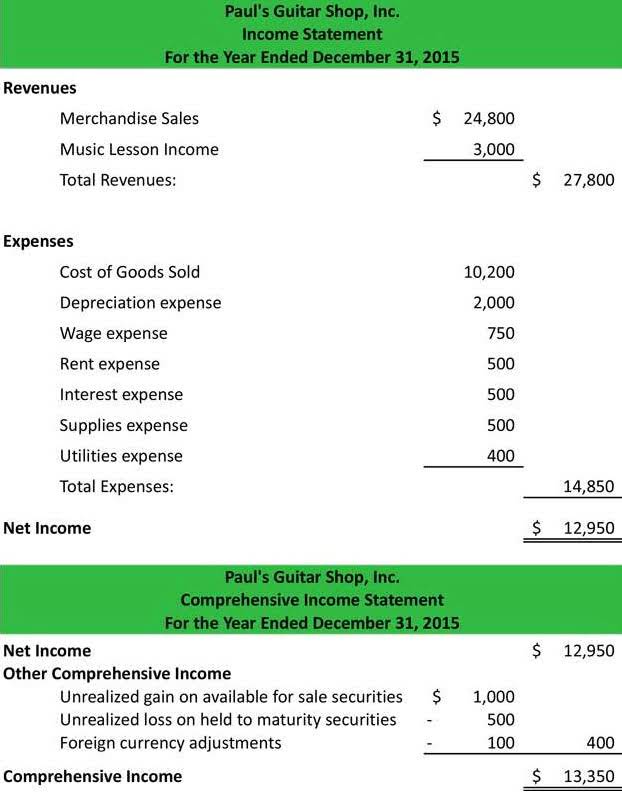
The type of depreciation you use impacts your company’s profits and tax liabilities. Accelerated depreciation methods, such as the double-declining balance method, generate more depreciation expenses in the early years of an asset’s bookkeeping life. As a result, the tax deduction for depreciation is higher, and the net income is lower.
- When using the straight-line depreciation formula, an asset depreciates by the same amount each year.
- Fixed assets, such as equipment and vehicles, are major expenses for any business.
- Instead, the balance in Accumulated Depreciation is carried forward to the next accounting period.
- However, it’s considered the most difficult depreciation method to calculate.
- As noted above, companies must begin depreciating assets once they place them into service.
- Depreciation is the decline in the book value of a fixed asset over time.
Types of Depreciation Methods
The amounts spent to acquire, expand, or improve assets are referred to as capital expenditures. The amount that a company spent on capital expenditures during the accounting period is reported under investing activities on the company’s statement of cash flows. In the case of an asset with a 10-year useful life, the depreciation expense in the first full year of the asset’s life will be 10/55 times the asset’s depreciable cost. The depreciation for depreciable assets the 2nd year will be 9/55 times the asset’s depreciable cost. This pattern will continue and the depreciation for the 10th year will be 1/55 times the asset’s depreciable cost. The most common method of depreciation used on a company’s financial statements is the straight-line method.

Accounting 101: Basic Terminologies, Accounting Cycle & More
This method is useful for companies that have large variations in production each year. The units of production method calculates depreciation based on the number of units Insurance Accounting produced in a particular year. The machine has a salvage value of R3,000, a depreciable base of R27,000, and a five-year useful life. The agency has the option to depreciate all of the laptops in the very first year, resulting in one huge tax deduction, or to spread it out over several years. The agency chooses the method of depreciation that would benefit them the most.
- In a way, while depreciation eats away at the assets of your company, it also helps you to save some quanta of the taxes that you would otherwise be paying.
- Deferred tax assets are tax credits or deductions that will be realized in the future.
- Many tax authorities allow businesses to deduct depreciation as an expense, reducing their tax liability.
- A deferred asset is an asset that will be realized in the future, while a prepaid expense is a payment made for goods or services that will be received in the future.
- Therefore, depreciation expense is used to recognize the amount of wear and tear.
How is depreciation recorded?

Therefore, you should always consult with accounting and tax professionals for assistance with your specific circumstances. Knowing what can and cannot be depreciated in a year will help business avoid high front-loaded expenses and highly variable financial results. If you’re wondering what can be depreciated, you can depreciate most types of tangible property such as buildings, equipment vehicles, machinery and furniture.
- Depreciation determined by this method must be expensed in each year of the asset’s estimated lifespan.
- Overall, the treatment of deferred assets can have a significant impact on a company’s financial statements.
- Let’s understand the five major methods of depreciation used by accountants with respective examples.
- The difference between the fixed asset cost and its salvage value is divided by the useful life of that asset in years to get the depreciating value for each year.
- Depreciating the property means you deduct the cost over its useful life.